
Jatamansi: An Ancient Root for Modern Hair Rituals | Root Fuel
Jatamansi: An Ancient Root for Modern Hair Rituals | Root Fuel

Jatamansi: An Ancient Root for Modern Hair Rituals
Discover the story behind this aromatic Himalayan root and why it has been valued in traditional beauty practices.
Some plants have a way of carrying their history with them.
Jatamansi is one of those plants.
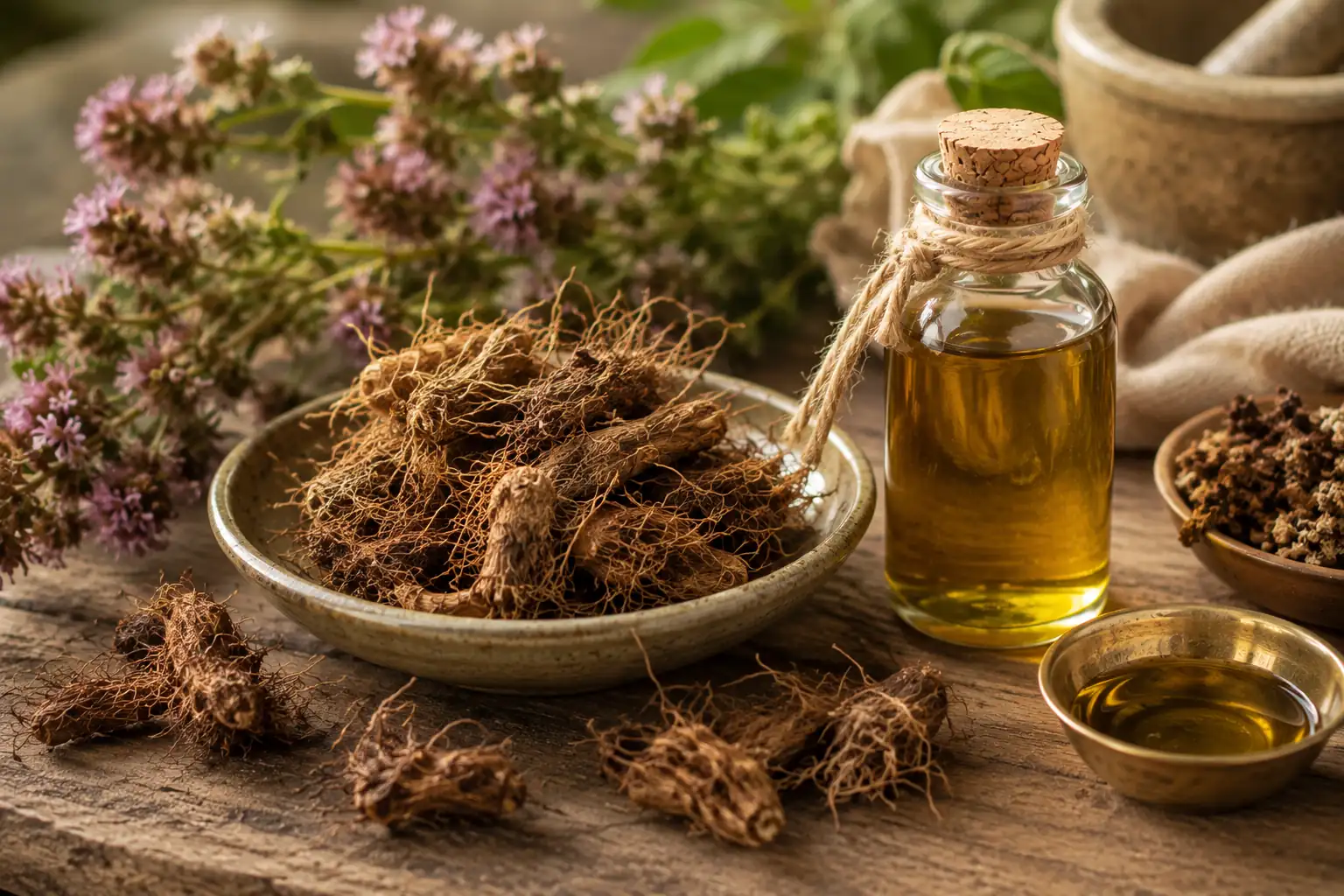
Known botanically as Nardostachys jatamansi, this aromatic herb has long been associated with the Himalayan region and has a rich history in traditional Indian herbal practices. Its fragrant underground rhizomes have been valued for generations and incorporated into traditional preparations, including those connected with hair and scalp care.
Today, as interest in botanical beauty continues to grow, Jatamansi offers a beautiful reminder that many modern beauty rituals have roots far deeper than the latest trend.
Meet Jatamansi
Jatamansi is a small flowering plant native to high-altitude regions of the Himalayas. The part that has traditionally attracted the most attention is its rhizome — an underground stem with a distinctive, earthy and aromatic character.
The name Jatamansi is often associated with the appearance of its tangled roots, which resemble matted locks of hair.
That connection feels particularly fitting for an ingredient with such a long association with traditional hair rituals.
For centuries, Jatamansi has appeared in traditional herbal preparations across the Indian subcontinent, where different parts of the plant have been valued for their aromatic and botanical qualities.
It is not a flashy ingredient.
It is an ingredient with a story.
A root steeped in tradition
Traditional Indian herbal practices have always had a close relationship with roots, leaves, flowers and oils.
Jatamansi became part of that world through preparations designed to incorporate its aromatic roots into everyday rituals. Traditional formulations have included oils and herbal preparations intended for external use, particularly in routines involving the scalp and hair.
This is where Jatamansi becomes especially interesting from a beauty perspective.
Rather than thinking of hair care as a collection of individual products, traditional practices often approached it as a ritual — an intentional moment involving oil, massage, botanical ingredients and time.
Jatamansi belongs naturally in that philosophy.
The aroma is part of the experience
One of the things that makes Jatamansi different from many botanical hair-care ingredients is its distinctive fragrance.
Its aroma is often described as earthy, woody and deeply herbal, with a richness that makes it feel almost grounding.
In traditional preparations, the scent of botanicals was not necessarily an afterthought. It was part of the overall experience.
That idea still resonates today.
A good hair ritual isn’t only about what you put on your hair. It is also about how the ritual makes you feel — the texture of the oil, the warmth of your hands, the fragrance of the herbs and the few quiet minutes you take for yourself.
Jatamansi brings something special to that experience.
Jatamansi and traditional hair rituals
Herbal hair oiling has been practiced across India for generations.
The ritual is simple but meaningful: botanical ingredients are incorporated into oils, the oil is gently applied to the scalp and hair, and the massage becomes a moment of care.
Jatamansi has traditionally appeared in preparations made for this kind of ritual.
Its place in these traditions reflects a broader principle of herbal beauty: plants are not simply ingredients; they are part of a relationship with nature.
An herb can have a scent, a texture, a history and a cultural connection that makes using it feel different from using an anonymous synthetic formulation.
That is part of what makes traditional botanicals so fascinating.
What does modern research say?
Jatamansi has attracted scientific interest because its rhizomes contain a variety of naturally occurring compounds, including sesquiterpenes and other phytochemicals.
Researchers have investigated Nardostachys jatamansi for a range of biological properties, contributing to the growing scientific interest in this traditional Himalayan botanical.
There is also continuing interest in its potential relevance to hair and scalp care.
But there is an important distinction between traditional use and clinically established results.
A plant can have a long history of use without every traditional claim being proven through modern clinical trials. For Root Fuel, that distinction matters. We value traditional botanical knowledge while keeping our language thoughtful and grounded.
Jatamansi doesn’t need exaggerated promises to be fascinating.
Its history is enough.
From the Himalayas to the modern bathroom
Today, beauty routines are often filled with complexity.
Multiple steps. Multiple products. Endless ingredient lists.
Botanical rituals offer another possibility.
A simpler approach.
An oil.
A few thoughtful ingredients.
A little time.
Jatamansi fits beautifully into this idea because it brings together several things that make traditional beauty so compelling: a distinctive botanical identity, a fascinating cultural history and an aromatic character that turns a routine into something more sensory.
It reminds us that beauty doesn’t always have to move forward by becoming more complicated.
Sometimes, it can move forward by looking back.
Why Jatamansi still matters
There is something powerful about an ingredient that has travelled through generations without losing its character.
Jatamansi comes from a very different world from today’s modern bathroom shelf, yet the basic idea behind using it remains surprisingly familiar:
Nature can become part of the ritual of caring for yourself.
That is the idea that continues to inspire us at Root Fuel.
We look to traditional ingredients not simply because they are old, but because they have stories worth carrying forward.
Jatamansi is one of them.
An aromatic Himalayan root.
A traditional botanical.
And a small reminder that some of the most meaningful beauty rituals begin with something growing in the earth.
The Root Fuel Ritual
Your hair-care routine doesn’t need to be complicated to feel special.
Set aside a few quiet minutes.
Warm a little herbal oil between your palms.
Massage it gently into your scalp.
Breathe in the aroma.
Let the ritual slow you down.
Because caring for your hair can be more than another step in your routine.
It can be a return to nature.
Rooted in nature. Made for you.