
Hibiscus for Hair: From Flower to Herbal Ritual | Root Fuel
Hibiscus for Hair: From Flower to Herbal Ritual | Root Fuel

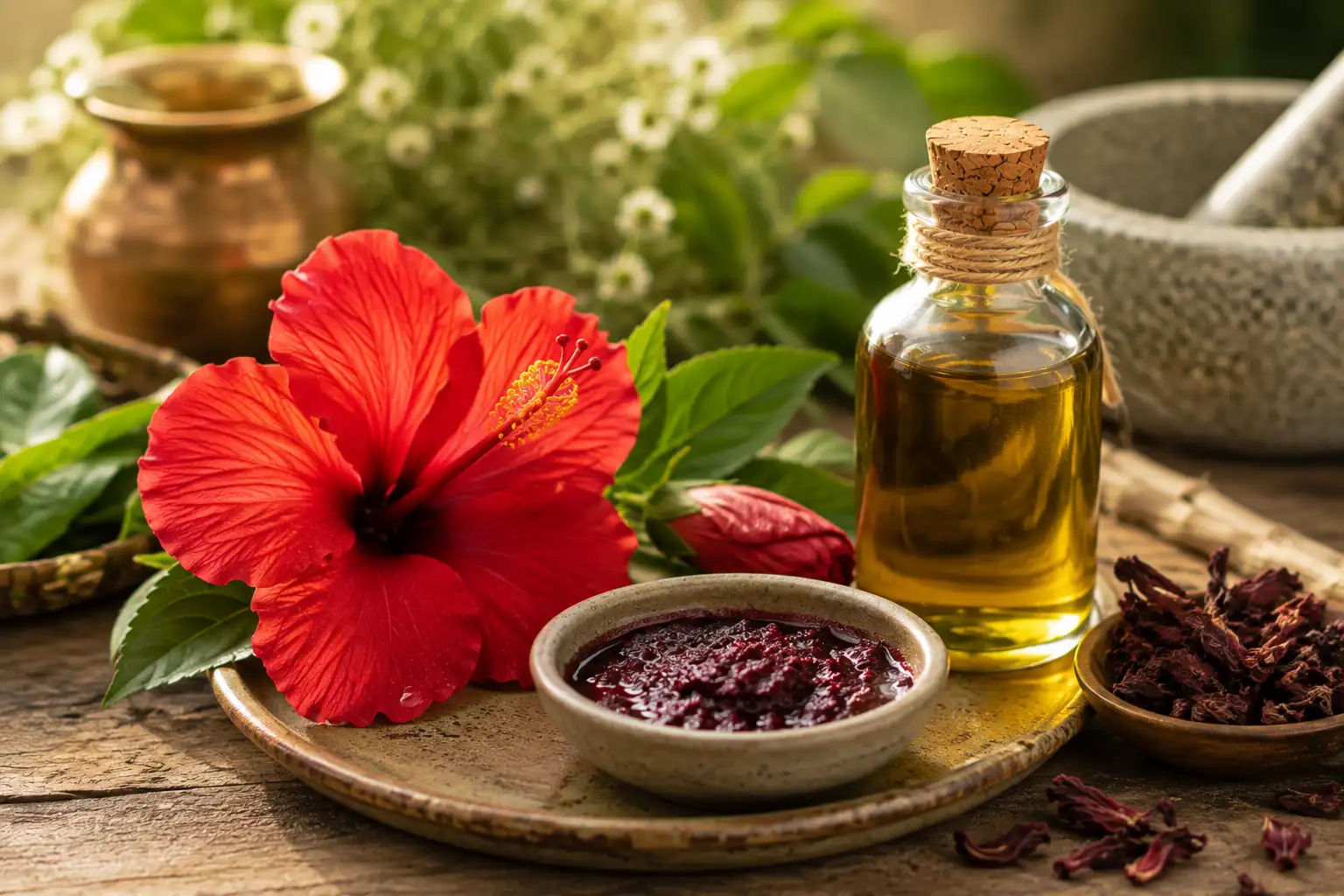
Hibiscus for Hair: From Flower to Herbal Ritual
Explore how this vibrant flower became a familiar part of traditional hair-care routines.
Few flowers are as instantly recognizable as hibiscus.
Its vivid petals, rich colors and unmistakable shape have made it a familiar sight across gardens and landscapes throughout India and beyond. But hibiscus has another story — one that belongs not just to gardens, but to traditional beauty rituals.
For generations, hibiscus flowers and leaves have been incorporated into homemade hair-care preparations, herbal pastes and oils. The flower’s beauty may catch the eye, but its place in traditional hair rituals comes from something deeper: a long-standing relationship between people, plants and simple ways of caring for themselves.
Today, hibiscus continues to inspire modern botanical hair care.
The flower behind the ritual
Hibiscus refers to a large group of flowering plants, with Hibiscus rosa-sinensis being one of the familiar ornamental varieties seen throughout tropical regions.
In traditional Indian hair-care practices, hibiscus has often been used in different forms — fresh flowers, leaves, pastes, powders and herbal preparations.
The approach was wonderfully simple.
A handful of flowers might be gathered, cleaned and crushed. Leaves could be incorporated into a paste. Botanicals could be combined with oils or other familiar ingredients and used as part of a hair-care routine.
There was no complicated formula.
Just plants, preparation and time.
From garden to hair ritual
One of the most interesting things about traditional beauty practices is how ordinary ingredients can become part of meaningful rituals.
Hibiscus is a perfect example.
A flower growing in the garden could make its way into a bowl, mortar or homemade preparation. It could be combined with other botanicals and transformed into something intended for hair care.
The process itself became part of the ritual.
Preparing the ingredients.
Grinding the petals.
Mixing the botanical preparation.
Applying it slowly to the hair and scalp.
Then taking the time to let nature do its part.
This kind of hands-on preparation is very different from the convenience of modern beauty shelves, but the idea behind it remains familiar: care can be a ritual, not just a routine.
Why hibiscus became part of traditional hair care
Hibiscus has a naturally soft, botanical character that has made it a popular ingredient in traditional preparations.
Its flowers and leaves contain naturally occurring plant compounds, and their use in traditional hair care has inspired continued interest in botanical formulations.
But the story of hibiscus is bigger than any single benefit.
What makes it special is how naturally it fits into a broader tradition of plant-based beauty.
Traditional hair care often brought several ingredients together rather than relying on one “hero” ingredient. Hibiscus could be combined with oils, roots, leaves and other botanicals depending on the preparation and the tradition behind it.
That is an important part of understanding herbal beauty.
The ritual was never just about one ingredient.
It was about the relationship between them.
The beauty of combining botanicals
Walk through a traditional herbal hair-care routine and you’ll often find an entire botanical world.
Flowers.
Leaves.
Roots.
Seeds.
Oils.
Each ingredient brings its own character, and together they create something that feels much more connected to nature than a conventional beauty routine.
Hibiscus fits naturally into that world.
Its rich red or pink petals make it instantly recognizable, while its presence in traditional preparations gives it a fascinating cultural history.
It also pairs beautifully with the kinds of ingredients traditionally associated with herbal hair rituals — from Bhringraj and Jatamansi to nourishing plant oils.
This is where botanical beauty becomes especially interesting.
It isn’t about finding one miraculous ingredient.
It’s about creating a thoughtful ritual from many small parts of nature.
A ritual passed through generations
For many families, traditional hair care has been something shared.
A mother preparing an oil.
A grandmother showing someone how to massage the scalp.
Flowers being gathered and prepared at home.
Hair being oiled before a wash day.
These moments can become memories as much as beauty rituals.
Hibiscus belongs to that world.
Its use in hair care reflects a time when beauty routines were often closely connected to the kitchen, the garden and the people around us.
The ingredients were familiar.
The preparations were often handmade.
And taking care of yourself could also mean spending time with someone you loved.
That sense of continuity is one of the reasons traditional botanical ingredients remain so appealing today.
Hibiscus in the modern beauty ritual
Modern hair care has made things considerably more convenient.
We have ready-made oils, shampoos, masks and treatments available at the push of a button.
But convenience doesn’t mean we have to lose the ritual.
We can still take inspiration from the traditions that came before us.
A botanical hair oil can become a few quiet minutes at the end of the day.
A shampoo can be part of a slower, more intentional wash routine.
And ingredients like hibiscus can connect a modern product to a much older appreciation for plants.
The goal isn’t to recreate the past exactly.
It’s to carry forward the part that still feels relevant.
Simple ingredients. Thoughtful rituals. A closer connection to nature.
More than a beautiful flower
It is easy to understand why hibiscus became part of traditional beauty.
It is vibrant, familiar and deeply connected to the landscapes where these traditions developed.
But perhaps its greatest appeal is what it represents.
Hibiscus reminds us that beauty has always existed beyond laboratories and cosmetic counters.
It can grow in a garden.
It can be prepared by hand.
It can become part of a ritual shared across generations.
And sometimes, that connection is just as meaningful as the ingredient itself.
Bringing the hibiscus ritual to Root Fuel
At Root Fuel, we are inspired by the ingredients that have been part of natural beauty traditions for generations.
Bhringraj.
Jatamansi.
Hibiscus.
Rosemary.
Roots, flowers, herbs and botanicals that remind us that nature has always been part of the way people care for their hair and skin.
We don’t believe modern beauty needs to abandon that connection.
Instead, we want to bring the spirit of those traditions into products designed for today’s everyday routines.
Because a good ritual doesn’t have to be complicated.
It simply has to feel meaningful.
The Root Fuel Ritual
Take a little time for yourself.
Work your favorite herbal oil gently through your hair.
Massage your scalp with slow, comfortable movements.
Let the natural aroma of the botanicals become part of the experience.
Put your phone down.
Take a breath.
Let the ritual take its time.
Because hair care can be more than something you do between everything else.
It can be a small return to nature.
Rooted in nature. Made for you.